
August is National Wellness Month, making it the perfect time to think beyond short-term health goals and focus on something that matters at every stage of adulthood: how to age gracefully.
Graceful aging is not about trying to stop the clock. It’s really about preserving strength, mobility, cardiovascular health, cognitive function, independence, and quality of life for as long as possible, so we can enjoy the time we have with those we love most.
In this article, we’ll cover:
- Whole-foods-based, high-protein nutrition
- Daily movement and regular strength training
- Medication and supplement reviews with your healthcare provider
- Restorative sleep and practical sleep hygiene
- Stress management and nervous system health
- Supplements that may complement a healthy lifestyle
- Basic strategies to start implementing this month
The goal is not perfection; it’s to build habits that support your health for years to come!
Always consult with your healthcare provider before making changes to your routine, especially if you take medications or have health conditions.
Longevity Starts With The Basics
 The conversation around longevity can quickly become complicated. There’s no shortage of discussions about specialized diets, supplements, testing, peptides, medications, wearable technology, bio-hacking, and other emerging strategies.
Some of these tools may have a place. But don’t overthink it! The ancient foundations of healthy aging remain surprisingly simple.
Your body needs adequate nutrition, physical activity, sleep, recovery, stress management, and regular medical care by trained professionals you trust.
The American Heart Association’s Life’s Essential 8 includes healthy eating, physical activity, quality sleep, healthy weight, stable blood sugar, normal blood pressure, healthy cholesterol, and avoiding tobacco and/or nicotine dependence as important components of overall heart health. Cardiovascular health matters for longevity because the health of the heart and blood vessels is closely connected to overall health, including brain health.
Prioritize Whole Foods And Enough Protein
As we age, maintaining muscle becomes increasingly important (and difficult). Sarcopenia is the age-related loss of muscle mass, strength, and physical function. Losing muscle can make everyday activities more difficult and can contribute to loss of independence.
Nutrition and resistance exercise work together to help preserve muscle function. Research in older adults supports adequate protein intake combined with regular physical activity, particularly resistance training.
Rather than focusing exclusively on calories or the number on the scale, consider whether your diet is providing enough protein and micronutrients to support your muscles, bones, brain, and metabolism.
7 Simple Strategies for Your Diet
 Build meals around a quality protein source. A solid goal for most adults is 6 ounces of whole-food-based protein (~40 g protein) per meal, x 3 meals.
- Deep dive on protein calculation: According to systematic review in the Journal of Cachexia Sarcopenia Muscle, a goal of 1.6 grams protein per kilogram body weight is important to keep adequate muscle mass. For example, if weight is 200 lbs, the goal is roughly 145 g of protein daily. If weight is 135 lbs, the goal is 100 g protein daily.
- Include foods such as beef, poultry, fish, eggs, Greek yogurt, cottage cheese, or other minimally processed protein sources that fit your individual dietary needs.
- Include vegetables, fruits, nuts, seeds, legumes, and other whole foods that provide fiber, vitamins, minerals, and phytonutrients (nutrients from plants).
- Choose minimally processed foods most of the time. Shopping the fresh sections in the periphery of the market, instead of the aisle with boxed and bagged processed foods is a good way to start.
- Make adequate hydration part of your daily routine. Half your bodyweight in ounces is usually about right, more if you’re sweating a lot. If you use reverse osmosis water, add electrolytes/minerals back into the water.
- If you have kidney disease or another medical condition that affects protein requirements, work with your healthcare professional to determine an appropriate intake.
Aging well does not mean eating perfectly. Wellness is the act of consistently giving your body the raw materials it needs to function well.
Move Every Day And Lift Weights
Walking is excellent. Gardening counts. Cycling, swimming, hiking, dancing, and recreational activities all count. These are great for daily movement!
But one type of exercise deserves special attention as we age: resistance training aka strength training aka weightlifting!
Strength training challenges your muscles against resistance, such as weights, resistance bands, machines, or even your own body weight. It can help preserve muscle mass, strength, mobility, and independence.
Current physical activity recommendations generally call for at least 150 minutes of moderate-intensity aerobic activity each week, along with muscle-strengthening activities at least two days per week. Older adults can also benefit from balance exercises and even yoga practice which challenges both strength and balance.
7 Simple Strategies for Staying Active
- Walk every day, even if you break it into several shorter walks.
- Strength train at least twice per week for 30 mins per session.
- Focus on major movement patterns such as squatting, pushing, pulling, hinging, carrying, and getting up from the floor or a chair.
- Progress gradually by increasing resistance, repetitions, or training volume.
- Include balance exercises as you get older.
- Avoid spending the entire day sitting, even if you exercise regularly.
- Choose activities you enjoy enough to continue doing for years.
You don’t need to become a pro athlete, but you do need to maintain the physical capacity to carry groceries, climb stairs, get off the floor, travel, take care of your home, play with your children, grandchildren, or pets, work in your yard, function and live independently.
That’s functional longevity!
Take Inventory Of Your Medications
Medication can be extremely beneficial and, in many circumstances, lifesaving. But as the number of prescriptions, over-the-counter medications, and supplements increases, so does the possibility of interactions.
This is especially important as we get older.
A drug interaction occurs when one medication, supplement, food, or other substance changes the effect of another medication. Some interactions can increase side effects or alter how much medication enters your bloodstream.
Make medication review part of your preventive health strategy.
Ask Your Doctor or Pharmacist
- What medications am I taking and why?
- Do I still need every medication on my list?
- Are there medications that may no longer be appropriate for me?
- Are any of my medications interacting with one another?
- Are my medications interacting with my supplements?
- Are there lifestyle changes that could improve the underlying health issue?
- If my health markers improve, could we eventually consider reducing a medication?
- What monitoring or laboratory testing is appropriate?
The important distinction is that you should never stop or reduce a prescription medication on your own.
Instead, work with your healthcare professional to determine whether improvements in nutrition, physical activity, weight, blood pressure, blood glucose, cholesterol, sleep, or other factors could change your treatment needs over time.
A medication review can also uncover medications that may be contributing to symptoms such as fatigue, dizziness, constipation, sleep disruption, or other problems.
Bring your healthcare professional a complete list of everything you take, including prescriptions, over-the-counter medications, vitamins, minerals, herbs, and other supplements.
Sleep: A Free Health Intervention
Sleep is not simply downtime. It is an important period for physical recovery, brain function, mood, and metabolic and cardiovascular health.
Most adults should aim for approximately 7 to 9 hours of sleep per night. Sleep quality and consistency matter too.
11 Simple Sleep Hygiene Strategies
Sleep hygiene refers to the habits and environmental factors that support healthy sleep. Most people have at least heard of sleep hygiene, but how many of us practice it? How many of the following do you honestly do regularly?
 Keep a consistent bedtime and wake time.
- Make your bedroom cool, dark, and quiet.
- Get comfy bedding you’re excited to sleep in.
- Reduce bright light exposure in the evening.
- Establish a relaxing pre-bed routine like drinking hot herbal tea and stretching.
- Avoid large meals close to bedtime and/or stop eating 3 hours before bed.
- Limit caffeine after noon.
- Avoid using alcohol, diphenhydramine (Benadryl), or THC as a sleep aid.
- Get regular daytime physical activity.
- Get natural morning light when possible.
- Put electronics away if they interfere with winding down.
Persistent snoring, gasping during sleep, excessive daytime sleepiness, or chronic insomnia deserves medical attention. Sleep apnea and other sleep disorders become increasingly important to identify as we age.
Manage Stress Before It Manages You
Stress is a normal biological response, so the problem isn’t just experiencing it. The problem is remaining in a state of prolonged stress without adequate recovery.
Chronic stress is the prolonged activation of the body’s stress response. Over time, chronic stress can affect sleep, mood, blood pressure, metabolism, digestion, cardiovascular health, and other aspects of physical and mental health. According to recent studies, chronic stress is even being implicated in progression of abnormal weight gain and diabetes!
Stress management is therefore not a luxury. It’s part of a longevity strategy.
11 Simple Stress-Relief Strategies
- Spend time outdoors.
- Walk without your phone.
- Try leaving your phone in another room when you do deep work like reading, writing, coding, crafting, cooking, or creating.
- Practice slow, controlled breathing, in through your nose, out through your mouth. Feel your shoulders relax down and your belly move in and out.
- Try meditation, prayer, yoga, or tai chi.
- Schedule hobbies that genuinely bring you enjoyment.
- Spend time with people who make you feel supported.
- Establish boundaries around work and technology.
- Make time for laughter and recreation.
- Consider counseling or therapy when stress becomes difficult to manage alone.
- Protect your sleep during particularly stressful periods.
Social connection deserves special attention. Supportive relationships and community are associated with better health and well-being, while social isolation and loneliness are associated with increased health risks.
Longevity isn’t just about adding years to your life. It is about having meaningful relationships and activities to enjoy during those years.
Consider Supplements As Part of the Bigger Picture
A thoughtful supplement program can complement a healthy diet and lifestyle, but supplements should not be viewed as a substitute for either.
We always recommend discussing supplements with a healthcare professional because supplements can have biological effects, interact with medications, interfere with laboratory testing, and cause adverse effects in some circumstances.
Mountain Peak Nutritionals offers several formulas designed to provide targeted nutritional and botanical support. Importantly, Mountain Peak Nutritionals works to ensure the highest quality possible with research support and third-party testing.
Adults focused on maintaining strong bones may want to discuss a comprehensive bone-support supplement like Osteo™ with their healthcare provider. Another product that may be of interest for those looking at cardiovascular wellness is Cardio Health Formula.
Mountain Peak Cardio Health
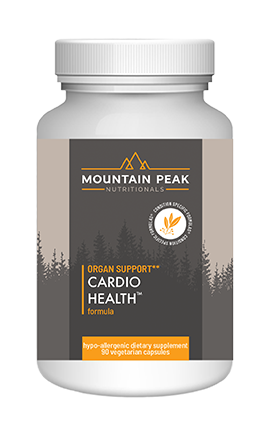 Mountain Peak Nutritionals Cardio Health™ formula combines vitamins, minerals, amino acids, and botanical ingredients intended to support cardiovascular and circulatory health so you can live your best life.
- Coenzyme Q10: Supports mitochondrial energy production and antioxidant protection. The technical sheet notes that CoQ10 levels may decline with age and certain medications.
- L-Carnitine: Helps transport fatty acids into the mitochondria, where they can be used to produce energy.
- Taurine: Supports heart function, healthy blood pressure, and circulation.
- Hawthorn: Traditionally used to support cardiovascular and heart health.
- Gynostemma Pentaphyllum: Supports healthy cholesterol levels and cardiovascular function.
- Dandelion: Provides minerals and supports healthy fluid balance and cardiovascular health.
- Magnesium: An essential mineral involved in more than 300 cellular reactions and enzyme systems.
- Potassium: Supports normal blood pressure, fluid balance, and cellular function.
- Chromium: An essential trace mineral involved in metabolic health and nutrient utilization.
- Vitamins B5, B6, B12, and Folate: Support energy metabolism, amino acid metabolism, DNA synthesis, and normal cellular and nervous system function.
Cardio Health Formula may support cardiovascular performance, healthy blood pressure, circulation, healthy cholesterol levels, and cellular energy production.
Always be sure to discuss any supplements you want to add with your healthcare professional to avoid any interactions with medications or medical conditions.
Supplements can be useful tools with a strong foundation of nutrition, movement, strength training, sleep, stress management, and appropriate medical care.
Your Graceful Aging Checklist
If you want to make August the month you recommit to your long-term health, start here:
- Eat: Build meals around whole foods and adequate protein.
- Move: Get some form of physical activity every day.
- Lift: Strength train at least twice each week.
- Balance: Include exercises that support stability and mobility.
- Sleep: Aim for 7 to 9 hours and improve your sleep environment.
- De-Stress: Develop at least one stress-management practice that you can use consistently.
- Connect: Maintain meaningful relationships and social activities.
- Review: Bring your complete medication and supplement list to your next appointment.
- Monitor: Know your blood pressure, blood glucose, cholesterol, and other relevant health markers.
- Supplement Wisely: Use supplements strategically and review them for potential medication interactions.
- Think Long-Term: Focus on habits you can implement slowly and steadily maintain for the next 10, 20, or 30 years and beyond!
Frequently Asked Questions
Is It Too Late To Start Strength Training?
No. Adults can improve strength and physical function even later in life. If you are new to exercise, have significant health conditions, or have balance or mobility concerns, start appropriately and consider working with your physician, physical therapist, or qualified fitness professional.
How Much Protein Do I Need As I Age?
Protein needs vary according to body size, activity level, health status, kidney function, and other factors. Research and expert recommendations commonly support higher protein intake for many older adults than the minimum amount established for younger adults, particularly when combined with resistance training.
Your individual protein target should be determined based on your health and nutritional needs.
Can Lifestyle Changes Reduce My Need For Medication?
Sometimes, improvements in diet, physical activity, body composition, blood pressure, blood glucose, cholesterol, sleep, or other health factors can change a person’s treatment needs. However, this is highly individual.
Never discontinue or reduce medication without guidance from the prescribing clinician. Instead, ask whether measurable improvements in your health could allow your treatment plan to be reassessed.
Are Supplements Necessary For Healthy Aging?
Not necessarily. A nutrient-dense diet and healthy lifestyle should come first.
Supplements can be useful when there is a nutritional deficiency, increased nutritional need, a specific health goal, or another reason supported by your healthcare professional. More supplements do not automatically mean better health.
What Is The Most Important Thing I Can Do For Longevity?
There is no single longevity habit that replaces the others.
The strongest approach is to consistently work on the fundamentals: eat nutritious food, consume adequate protein, stay physically active, maintain muscle and strength, sleep well, manage stress, maintain social connections, avoid tobacco, monitor important health markers, and work with your healthcare team to address problems early.
Graceful aging is less about finding one magic intervention and more about building a body and lifestyle that can support you for the long term.
If this article gave you useful ideas for improving your health and aging well, share it with a friend or family member who could benefit from it! Wellness is more powerful when we encourage one another to take better care of ourselves and make healthy aging a shared goal.
Important: This article is for educational purposes only and is not intended to diagnose, treat, cure, or prevent any disease. Always speak with your physician or other qualified healthcare professional before changing your diet, exercise program, medications, or supplement regimen. Do not stop or reduce prescription medications without guidance from the prescribing clinician. Supplements can interact with medications and may not be appropriate for everyone. This information is not a replacement for an established doctor-patient relationship.
References
- American Heart Association. (n.d.). Life’s Essential 8. American Heart https://www.heart.org/en/healthy-living/healthy-lifestyle/lifes-essential-8
- Nunes, E. A., et al. (2022). Systematic review and meta-analysis of protein intake to support muscle mass and function in healthy adults. Journal of cachexia, sarcopenia and muscle, 13(2), 795–810. https://doi.org/10.1002/jcsm.12922
- American Heart Association. (n.d.). How to control cholesterol. American Heart Association. https://www.heart.org/en/healthy-living/healthy-lifestyle/lifes-essential-8/how-to-control-cholesterol-fact-sheet
- National Institute on Aging. (n.d.). Health benefits of exercise and physical activity. National Institute on Aging. https://www.nia.nih.gov/health/exercise-and-physical-activity/health-benefits-exercise-and-physical-activity
- National Institute on Aging. (n.d.). Three types of exercise can improve your health and physical ability. National Institute on Aging. https://www.nia.nih.gov/health/exercise-and-physical-activity/three-types-exercise-can-improve-your-health-and-physical
- National Institute on Aging. (n.d.). Healthy eating as you age: Know your food groups. National Institute on Aging. https://www.nia.nih.gov/health/healthy-eating-nutrition-and-diet/healthy-eating-you-age-know-your-food-groups
- National Institute on Aging. (n.d.). Sleep. National Institute on Aging. https://www.nia.nih.gov/health/sleep
- American Psychological Association. (n.d.). Stress effects on the body. American Psychological Association. https://www.apa.org/topics/stress/body
- National Institute on Aging. (n.d.). Taking medicines safely as you age. National Institute on Aging. https://www.nia.nih.gov/health/medicines-and-medication-management/taking-medicines-safely-you-age
- S. Food and Drug Administration. (n.d.). Mixing medications and dietary supplements can endanger your health. https://www.fda.gov/consumers/consumer-updates/mixing-medications-and-dietary-supplements-can-endanger-your-health
- National Center for Complementary and Integrative Health. (n.d.). Red yeast rice. National Center for Complementary and Integrative Health. https://www.nccih.nih.gov/health/red-yeast-rice
- National Center for Complementary and Integrative Health. (n.d.). High cholesterol and dietary supplements. National Center for Complementary and Integrative Health. https://www.nccih.nih.gov/health/tips/high-cholesterol-and-dietary-supplements
- Centers for Disease Control and Prevention. (n.d.). About social connectedness. https://www.cdc.gov/social-connectedness/about/index.html
- Bauer, J., Biolo, G., Cederholm, T., Cesari, M., Cruz-Jentoft, A. J., Morley, J. E., Phillips, S., Sieber, C., Stehle, P., Teta, D., Visvanathan, R., Volpi, E., & Boirie, Y. (2013). Evidence-based recommendations for optimal dietary protein intake in older people: A position paper from the PROT-AGE Study Group. Journal of the American Medical Directors Association, 14(8), 542–559. https://pubmed.ncbi.nlm.nih.gov/23867520/
- Deutz, N. E. P., Bauer, J. M., Barazzoni, R., Biolo, G., Boirie, Y., Bosy-Westphal, A., Cederholm, T., Cruz-Jentoft, A., Krznariç, Z., Nair, K. S., Singer, P., Teta, D., Tipton, K., & Calder, P. C. (2014). Protein intake and exercise for optimal muscle function with aging: Recommendations from the ESPEN Expert Group. Clinical Nutrition, 33(6), 929–936. https://pubmed.ncbi.nlm.nih.gov/24814383/
- World Health Organization. (2020). WHO guidelines on physical activity and sedentary behaviour. World Health Organization. https://www.who.int/publications/i/item/9789240015128
- Mountain Peak Nutritionals. (2024). Cardio Health™: Technical data sheet. Mountain Peak Nutritionals. https://mountainpeaknutritionalspro.com/wp-content/uploads/2020/09/Cardio-Health_2pg_PB-version.pdf