Mountain Peak Nutritionals vs. Generic, Off-the-Shelf & Discount Supplements
How the Differences Can Affect Quality, Value & Your Wellness Routine
Two supplement labels can look a lot alike.
They may reference the same vitamins, minerals, botanicals, and enzymes. Or they can talk about the same wellness goals. That can make some products seem interchangeable.
However, two supplements that appear identical on the surface may differ significantly in how they’re formulated, manufactured, labeled, and intended to support overall wellness.
That’s why a meaningful comparison requires looking beyond the name on the front of the bottle. Ingredient forms, serving amounts, formulation strategy, supporting ingredients, labeling transparency, manufacturing controls, and suitability for the individual can all affect how well a supplement fits into a wellness routine.
This guide explains what informed consumers should look for when comparing supplements, covering:
- What “Generic” and “Discount” Mean in the Supplement Industry
- Mountain Peak Nutritionals vs. Generics at a Glance
- Why the Front of the Bottle Does Not Tell the Whole Story
- Why Ingredient Forms Matter
- Why Formulation Is More Than an Ingredient List
- Why Serving Size and Ingredient Amounts Deserve Attention
- The Role of Other Ingredients
- Manufacturing and Quality Controls
- Label Transparency and Responsible Claims
- Price vs. Long-Term Value
- When a Basic Off-the-Shelf Supplement May Be Enough
- How to Compare Supplements Before You Buy
- FAQs
While no single factor determines whether a supplement is the right choice, understanding how these areas work together can help you make a more informed comparison.
What Do “Generic” and “Discount” Mean in the Supplement Industry?
A “generic supplement” is usually an informal description, rather than a defined regulatory category. That’s because, unlike generic prescription drugs, dietary supplements are not classified or approved by the FDA as “generic” equivalents to other products.
With that, generic supplements may describe:
- Store-brand vitamins and supplements
- Private-label products sold by multiple retailers
- Basic single-ingredient formulas
- Mass-market products developed for broad audiences
- Lower-priced alternatives to practitioner-oriented or specialty formulas
- Products whose primary differentiator is price
Similarly, off-the-shelf usually refers to widely available products that can be purchased without professional guidance.
Discount supplements generally describe an option marketed heavily on affordability, bulk quantity, promotions, or cost per capsule.
These descriptions do not prove that a product is good or bad. They simply indicate that products positioned similarly can still differ substantially in how they are formulated, manufactured, labeled, and intended to be used.
Mountain Peak Nutritionals vs. Generic Supplements at a Glance
The following table summarizes some helpful areas to examine when comparing formulas.
| Comparison Factors | Mountain Peak Nutritionals Approach | Common Generic or Discount Approach |
|---|---|---|
| Primary emphasis | Targeted nutritional support and purposeful formulation | Broad availability, simplicity, or lower price |
| Formula design | High-quality ingredients selected and balanced to work within a defined formula | Frequently centered on a familiar headline ingredient |
| Ingredient evaluation | Considers ingredient form, amount, and role within the complete formula | May prioritize recognizable ingredients or label simplicity |
| Supporting ingredients | May combine complementary ingredients for a specific nutritional purpose | Often limited to a basic or single-ingredient format |
| Product selection | Intended for consumers seeking more deliberate nutritional options | Intended for broad, convenient retail purchasing |
| Consumer decision-making | Encourages examination of the complete Supplement Facts panel | Often compared primarily by price, capsule count, or front-label claims |
| Value proposition | Formula quality, intentionality, and fit | Accessibility and lower initial cost |
Please be aware that:
- The above table does not mean that every Mountain Peak Nutritionals product is appropriate for every person or that every mass-market supplement lacks value. The central difference is the framework used to evaluate the product.
- A supplement should not be selected solely because it is inexpensive, expensive, familiar, popular, or prominently displayed. It should be assessed according to what it contains, why those ingredients are included, and whether the formula is appropriate for the person considering it.
Why the Front of the Bottle Does Not Tell the Whole Story
Supplement packaging is designed to communicate quickly. That makes the front label useful for identifying the general product category, but insufficient for evaluating the formula.
For example, two products might both be labeled:
- Magnesium
- Digestive enzymes
- Probiotic support
- Multivitamin
- Fiber supplement
- B-complex
- Antioxidant support
Despite those similar descriptions, the products could differ in:
- The specific forms of their ingredients
- The amount provided per serving
- The number of capsules required
- Whether amounts are disclosed individually
- The presence of complementary ingredients
- The use of fillers, binders, coatings, sweeteners, or flavorings
- Storage requirements
- Allergen statements
- Intended frequency of use
- Label directions and warnings.
The Supplement Facts panel is, therefore, more informative than the product name alone.
Consumers should also remember that “natural,” “premium,” “professional,” and similar terms do not independently establish that a formula is effective, safe, or appropriate. Meaningful evaluation requires specific information, not simply appealing terminology.
Why Ingredient Forms Matter
An ingredient name may refer to a broad nutrient category, instead of one uniform substance. Specifically:
- Minerals are commonly bound to other compounds.
- Vitamins may be supplied in different chemical forms.
- Botanical ingredients may be presented as whole herbs, extracts, or standardized preparations.
- Enzymes may be differentiated by their activity, not just their weight.
These distinctions can influence characteristics such as:
- Stability
- Solubility
- Tolerability
- Concentration
- Activity
- Storage needs
- How an ingredient functions within a formula
This does not mean one form is universally the “best.” The appropriate form can depend on the nutrient, intended use, formulation, serving amount, other ingredients, and the individual.
When comparing Mountain Peak Nutritionals with an off-the-shelf alternative:
- Do not stop after confirming that both labels mention the same nutrient.
- Compare the complete ingredient designation.
- Consider asking questions like:
- Which ingredient forms are included?
- What amounts of key ingredients are in each serving?
- How many capsules constitute one serving?
- Are other minerals or nutrients included?
- Does the label clearly distinguish the compound weight from the nutrient amount?
- Is the serving appropriate in the context of my total dietary and supplemental intake?
The same principle applies to botanicals, enzymes, probiotics, amino acids, fatty acids, and other specialty ingredients.
Why Formulation Is More Than an Ingredient List
A product can contain many impressive ingredients without representing a well-designed formula.
Good formulation is not a competition to place the longest list on the label. It requires decisions about:
- Why each ingredient is included
- How much of each ingredient is provided
- Whether ingredients have complementary roles
- Whether the serving size is practical
- Whether certain ingredients are redundant
- Whether the complete formula remains appropriate for its intended purpose.
Rather than emphasizing the number of ingredients on the label, Mountain Peak Nutritionals focuses on developing formulas in which each ingredient serves a defined nutritional purpose.
This distinction matters because:
- Supplements are often marketed around a single popular ingredient while providing limited context about the rest of the product.
- A formula may contain numerous ingredients in amounts that appear substantial collectively but are difficult to evaluate individually.
- More ingredients do not automatically mean more value. At the same time, fewer ingredients do not automatically mean a weaker product.
Well-balanced, thoughtfully formulated supplements tend to clearly state:
- The formula’s general nutritional purpose
- The role of its primary ingredients
- The amount supplied per serving
- How and when the product is intended to be used
- Relevant warnings, allergens, and storage directions
If a formula cannot be explained clearly, it may also be more difficult to evaluate and compare with confidence.
Why Serving Size and Ingredient Amounts Deserve Attention
A lower bottle price does not always mean a lower daily cost.
Example:
Suppose Product A contains 120 capsules, and Product B contains 60 capsules.
Product A may appear to offer twice as much product. But if Product A requires four capsules per serving and Product B requires one, the number of actual servings tells a different story.
To calculate price per serving, use this formula:
Bottle price ÷ servings per container = approximate cost per serving
This can provide a more useful starting point than price per capsule.
Additionally, consumers should examine whether the listed amount applies to:
- One capsule
- A two-, three-, or four-capsule serving
- One scoop
- Multiple daily servings
- The entire ingredient blend
- Each ingredient individually
In this example, Product A has the lower bottle price but the higher cost per serving.
That calculation still does not determine which product is preferable, though. Ingredient forms, amounts, formula design, quality controls, and individual suitability also matter. It does, however, demonstrate why capsule count alone can be misleading.
| Label Detail | Product A | Product B |
|---|---|---|
| Bottle price | $19.99 | $34.99 |
| Capsules per bottle | 120 | 90 |
| Capsules per serving | 4 | 1 |
| Servings per bottle | 30 | 90 |
| Approximate cost per serving | $0.67 | $0.39 |
The Role of Other Ingredients
The “Other Ingredients” section typically identifies substances used to manufacture, stabilize, encapsulate, coat, flavor, color, or preserve a product.
Depending on the product format, these may include:
- Capsule materials
- Cellulose
- Rice flour
- Silica
- Magnesium stearate
- Glycerin
- Natural flavors
- Sweeteners
- Coloring agents
- Anti-caking agents
The presence of an excipient does not automatically indicate poor quality. Many serve legitimate manufacturing or stability functions.
At the same time, consumers may have dietary restrictions, allergies, sensitivities, or personal preferences that make this section important. Consequently, it may be necessary to check whether a product is:
- Vegetarian or vegan
- Free from a specific allergen
- Made with gelatin
- Sweetened
- Flavored
- Colored
- Suitable for a particular dietary pattern
The right question is not whether a product contains any other ingredients. It is whether those ingredients are necessary, transparently disclosed, and suitable for the consumer.
Manufacturing and Quality Controls
Dietary supplement manufacturers, packagers, labelers, and holders are subject to FDA current good manufacturing practice requirements under 21 CFR Part 111.
These requirements address areas such as:
- Establishing product specifications
- Quality-control operations
- Manufacturing records
- Equipment and facilities
- Packaging and labeling
- Handling complaints
- Maintaining documentation
The purpose of these requirements is to help ensure that dietary supplements meet applicable quality specifications and are manufactured, packaged, and labeled according to established records.
However, consumers should understand what manufacturing terminology does and does not establish when evaluating products.
This indicates that the facility is expected to follow applicable manufacturing practices. It does not, by itself, prove that:
- The product is clinically effective.
- The formula is appropriate for every person.
- Every ingredient has been independently tested.
- The FDA has approved the product.
- The finished supplement is equivalent to another product.
The FDA does not approve dietary supplements before they reach the market in the same way it approves medications. Statements suggesting that a supplement is “FDA approved” should, therefore, be treated cautiously.
Independent organizations can evaluate supplements for selected quality characteristics. Depending on the program, testing may help verify that a product:
- Contains the ingredients listed on its label
- Was manufactured according to specified requirements
- Does not contain certain contaminants above established limits
- Meets particular identity or potency criteria
The National Institutes of Health notes that quality seals do not guarantee that a supplement is safe or effective. They address defined quality criteria, rather than proving that a product will produce a particular health result.
With that, certification and testing claims should always be evaluated specifically. Consumers are advised to look for:
- The testing organization’s name
- The scope of the testing
- Whether the certification applies to the facility, an ingredient, or the finished product.
Label Transparency and Responsible Claims
Dietary supplements may make certain structure/function claims, describing how an ingredient supports a normal structure or function of the body. These claims must be truthful and not misleading, and manufacturers must be able to substantiate their claims.
Structure/function claims are different from claims that a product diagnoses, treats, cures, or prevents a disease. Only drugs can legally make disease-treatment claims in this manner.
As a result, it’s prudent to be cautious when a supplement promises to:
- Cure a diagnosed condition
- Replace prescribed medication
- Produce guaranteed results
- Work instantly for everyone
- Eliminate the need for medical care
- Prevent or treat a disease
- Deliver a dramatic outcome without relevant limitations.
Responsible supplement communication is usually more measured. It explains the intended nutritional role of a product without presenting it as a substitute for diagnosis, treatment, or individualized medical guidance.
Some labels group ingredients into a proprietary blend and list only the total weight of that blend.
This format may protect formulation details, but it can also make direct comparison more difficult because consumers cannot always see how much of each ingredient is included.
When evaluating a blend, consider:
- Whether individual amounts are disclosed
- Whether meaningful ingredient details are provided
- Whether the label identifies extract ratios or standardization where relevant
- Whether enzyme activity units are listed where appropriate
- Whether probiotic quantities are described clearly
- Whether the blend’s total amount appears consistent with the included ingredients
Transparency does not automatically prove performance, but it improves a consumer’s ability to evaluate and discuss a product with a qualified healthcare professional.
Price vs. Long-Term Value
Discount supplements often compete effectively on purchase price. For consumers seeking a basic nutrient in a straightforward form, that may be a legitimate advantage.
However, price and value are not identical.
A meaningful value comparison may include:
- Cost per serving
- Amount of the relevant nutrient per serving
- Ingredient form
- Number of doses required each day
- Formula complexity
- Label transparency
- Product shelf life
- Storage requirements
- Ease of use
- Suitability for the consumer
- The likelihood that the product will be used consistently
With that, a low-cost bottle provides little value if:
- The serving directions are impractical.
- The product does not fit the consumer’s needs.
- Important ingredient amounts are unclear.
- It duplicates other supplements unnecessarily.
- The user stops taking it because of format or tolerability.
- It contains ingredients the consumer was trying to avoid.
Conversely, a higher-priced formula is not automatically a better purchase. The additional cost should correspond to something meaningful and verifiable within the product, not merely premium packaging or broad marketing language.
The goal is not to select the cheapest or most expensive option. It is to select a formula whose:
- Ingredients make sense.
- Amounts are clearly presented.
- Instructions are practical.
- Quality information is credible.
- Intended use aligns with the consumer’s needs.
This is one way Mountain Peak Nutritionals seeks to distinguish its formulas from many products developed primarily around lower cost or broad retail distribution.
When a Basic Off-the-Shelf Supplement May Be Enough
Not everyone needs a complex, multi-ingredient formula.
A straightforward retail supplement may be appropriate when:
- A healthcare professional has recommended a specific nutrient and amount.
- The consumer wants a basic single-ingredient product.
- The label clearly identifies the ingredient and serving amount.
- The product fits the consumer’s dietary needs.
- There are no problematic interactions or duplicate ingredients.
- The user can follow the directions consistently.
- The product’s quality information is sufficient for the intended use.
For example, someone who has been advised to take a specific amount of a single nutrient may not benefit from an elaborate blend containing multiple unrelated ingredients.
The purpose of comparing supplements is not to make every wellness routine more complicated. It is to make the decision more informed.
When a More Targeted Formula May Be Worth Considering
A more deliberately designed formula may be preferable when a consumer values:
- Multiple complementary ingredients
- A formula developed around a defined nutritional objective
- Specific ingredient forms
- Greater detail about ingredient amounts
- More specialized options
- A consolidated formula instead of numerous separate products
Individual needs vary, and more is not always better.
Combining several formulas can also increase the likelihood of duplicating nutrients or consuming amounts that are not appropriate.
How to Compare Supplements Before You Buy
Use this checklist when comparing vitamins, supplements, and formulas from Mountain Peak Nutritionals with a generic, store-brand, or discount alternative.
Start with the nutritional objective rather than a product trend. Then, ask yourself:
- What aspect of wellness am I trying to support?
- Has a healthcare professional identified a specific nutritional need?
- Am I looking for one ingredient or a multi-ingredient formula?
- Am I already taking products with overlapping ingredients?
Do not rely exclusively on the product name or front-label language. Review:
- Serving size
- Servings per container
- Amount per serving
- Percent Daily Value, where established
- Complete ingredient forms
- Proprietary blends
- Other ingredients
One capsule of one formula may not equal one capsule of another.
So, make sure you are comparing the same amount of product. Compare the labeled daily or intended serving, rather than the bottle count alone.
Look beyond broad names, such as vitamin C, magnesium, zinc, or turmeric.
Identify the full form, source, extract description, standardization, activity unit, or strain information where applicable.
Assess whether each ingredient appears connected to the formula’s stated nutritional purpose.
Avoid assuming that the product with the longest label is necessarily the most thoughtfully designed.
Pay particular attention to:
- Age restrictions
- Pregnancy or nursing warnings
- Medication interactions
- Allergy statements
- Surgery-related cautions
- Storage instructions
- Recommended duration or frequency of use.
Instead of accepting a broad statement such as “quality tested,” take a closer look and determine:
- What was tested?
- Was the ingredient or finished product tested?
- Who performed the testing?
- Is a recognized certification identified?
- What does the certification actually cover?
Divide the product price by the number of labeled servings.
Then, assess what each serving provides, not simply how many capsules are in the bottle.
Dietary supplements are intended to supplement the diet. They should not be treated as substitutes for a varied diet, healthy habits, medical evaluation, or prescribed treatment.
Also, review all supplements together to identify repeated ingredients.
Professional guidance is particularly important for people who:
- Take prescription or over-the-counter medications
- Are pregnant or nursing
- Are preparing for surgery
- Have a diagnosed medical condition
- Are purchasing supplements for a child
- Use several supplements simultaneously
- Have experienced a previous adverse reaction.
The NIH Office of Dietary Supplements advises consumers to tell their healthcare providers about all supplements and medications they take because some ingredients can interact with medicines or interfere with medical tests and procedures.
Explore Patient-Focused Resources from Mountain Peak Nutritionals

Graceful Aging: Practical Strategies For Longevity And Lifelong Wellness
August is National Wellness Month, making it the perfect time to think beyond short-term health goals and focus on something that matters at every stage of adulthood: how to age gracefully. Graceful aging is not about trying to stop the clock. It’s really about preserving strength, mobility, cardiovascular health, cognitive function, independence, and quality of […]
How to Choose the Right Digestive Enzyme Supplement
More enzymes do not necessarily make a better digestive enzyme supplement. What matters is whether a formula contains thoughtfully selected enzymes in meaningful activity levels and whether its intended use fits your needs. This guide explains what to look for, what to question, and how to compare digestive enzyme supplements with confidence, with more on: […]

Love Your Liver: 7 Practical Ways to Improve Liver Health Naturally in 2026
Discover how to support liver health this summer. Learn about NAFLD, viral hepatitis prevention, best foods, supplements like milk thistle, and simple lifestyle tips backed by science.
FAQs
No supplement brand is automatically the best choice for every person.
Mountain Peak Nutritionals distinguishes its products through targeted nutritional formulas and a deliberate approach to ingredient selection. Consumers should still evaluate the specific formula, serving amount, directions, warnings, and suitability for their individual needs.
No. FDA-approved generic drugs must meet defined regulatory standards related to their approved reference drugs.
“Generic supplement” is generally an informal consumer or marketing term and does not indicate that two dietary supplements are therapeutically equivalent.
No. Price alone cannot establish quality.
A lower-priced product may offer a suitable basic ingredient, while an expensive product may not justify its price. Ingredient identity, amount, formula design, manufacturing information, transparency, and individual suitability are more useful comparison factors than price alone.
Prices may reflect differences in several areas, including ingredient form, concentration, supporting ingredients, serving size, capsule count, manufacturing processes, testing, packaging, distribution, brand positioning, and retailer margins.
Consumers should verify which differences are meaningful, instead of assuming that price proves quality.
Not necessarily. A longer label may represent a comprehensive formula, unnecessary complexity, or very small amounts of numerous ingredients. Each ingredient should have a clear role, and its amount should be evaluated within the complete formula.
The Supplement Facts panel is one of the most important areas because it identifies serving size, dietary ingredients, amounts, and Percent Daily Values where established.
Consumers should also read the other ingredients, directions, warnings, allergen information, and storage instructions.
FDA generally does not approve dietary supplements or their labels before they are marketed.
Manufacturers and distributors are responsible for ensuring that their products are safe and that claims are truthful and not misleading. The FDA can take action against manufacturers or brands that release adulterated, misbranded, or otherwise unlawful products.
No. Current good manufacturing practices establish requirements related to how dietary supplements are manufactured, packaged, labeled, and held. Compliance does not prove that a product will produce a particular result or that it is appropriate for every consumer.
No. Independent testing may verify specific characteristics, such as identity, label accuracy, manufacturing quality, or contaminant limits. It does not necessarily establish clinical effectiveness or guarantee that a supplement is safe and appropriate for everyone.
Compare cost per serving, ingredient forms, amounts, formula design, transparency, directions, quality information, and suitability for your needs. A product represents value when its relevant characteristics justify its cost and support consistent, appropriate use.
That depends on the specific products and the individual. Supplements may contain overlapping nutrients or ingredients that interact with medications, other supplements, laboratory tests, or medical procedures. Review all labels and consult a qualified healthcare professional before combining products.
Choosing a Supplement With Greater Confidence
The most meaningful distinction between Mountain Peak Nutritionals and many generic, off-the-shelf, or discount options isn’t simply the name on the bottle.
It’s the attention given to the complete formula and the role each ingredient plays within it.
That doesn’t mean every basic retail supplement is the wrong choice. In many situations, a straightforward formula may provide appropriate nutritional support.
Likewise, a more comprehensive formula isn’t automatically better simply because it contains more ingredients or carries a higher price.
The goal is to select a product that aligns with your individual wellness goals and is supported by thoughtful formulation, transparent labeling, and meaningful value.
An informed comparison today can help you make more confident supplement decisions for years to come.
Disclaimer: These statements have not been evaluated by the Food and Drug Administration. This information is for educational purposes only and is not intended to diagnose, treat, cure, or prevent any disease. Consult a qualified healthcare professional before beginning a dietary supplement, particularly if you are pregnant or nursing, take medication, have a medical condition, or are preparing for a medical procedure.
Reviews & Testimonials
Check out some of our recent reviews to see what our customers have said about our vitamins, supplements, and customer service.
"Outstanding customer service and an even better product! I confidently recommend Mountain Peak Nutritionals to my own friends and family. In an industry where many major supplement companies sacrifice quality for quantity after being acquired by larger corporations, Mountain Peak stands apart. Their unwavering commitment to premium, effective products ever wavers—and to top it off, they're a local company too!"
— Brandon McCuistion
NW Injury & Rehab Center, P.S.
"The Energy Formula drink is so good! The orange flavor tastes great and has a slight fizz with it. I love sipping on it in the morning and it has now replaced my 2nd and 3rd cups of coffee. I am very pleased because it doesn't give you the typical "jittery" energy that other drinks do - it provides more of an even/steady energy along with multi-vitamin/minerals. I also feel completely safe letting my teenage daughters drinking it vs. the other drinks that are on the market."
— Kellie Peotter
"I've tried several of Mountain Peak's supplements and I think my favorites are their energy formula, the multi-vitamin, and sleep easy. I feel so much better using these three supplements consistently, and I'm excited to try others! As a personal trainer and gym owner, I'm picky about the companies I work with. I proudly display Mountain Peak's supplements in my gym because they're a solid company with quality products. 10/10 recommend. I'm a believer!"
— Erin Live Fit
"Mountain Peak Nutritionals Energy Formula is ABSOLUTELY AMAZING!! It gives me the extra boost I need when I am working out and find my workouts to be that much better. I lift heavier and last longer doing cardio. It is a total bonus packed full with a multivitamin as well. I have tried so many other energy drinks and this is by far the best without all the added ingredients. It only has ~15 grams of caffeine which I also love. If you haven’t tried it yet it’s a must!! I use other Mountain Peak products and CANNOT say enough about this brand!!"
— Conor Noonan
"I have been looking for a good calcium supplement and tried Mountain Peak Nutritionals Osteo. I LOVE it! My body does well with it and it makes me stronger! Since then, I have decided to try several of their other supplements. Mountain Peak Nutritionals has high quality supplements not filled with junk or fillers. They are great! I have enjoyed "Sleep Easy" a lot as well!"
— Alice C. Terry
"The Memory formula is great for eliminating brain fog. Focus much better than fog."
— Michael Swanick
"The Mountain Peak Energy Formula is outstanding!. Really helps with recovery from my workouts. I have tried other products on the market but none has all of the nutrients contained in the Energy Formula."
— Chuck Heimerdinger
"Great local business with great owners and products. All of their supplements are made for doctor clinics so they are potent and of the highest quality. I really enjoy the Energy Formula, Sleep Easy and the Tranquility."
— Travis Colson
"I have always struggled with anxiety a lot, and I've been taking MPN's Tranquility supplement for about two months now and I've noticed a CONSIDERABLE difference in my ability to manage my anxiety as well as functionality while I am anxious. Great product, and it doesn't make me feel numb either, like most drug store medications."
— Te'aMarie Kovalik
"I've used Mountain Peak nutritionals for several years. I am pleased with the quality and prompt delivery. I am a type II diabetic and the glycemic formula has worked well to help me keep my blood sugars in line..I've used several others as well with good results! I have recommended them to family and friends."
— Virginia Kadera
"We love the Mountain Peak Ultra High Multivitamin and have been getting them for many years. We never want to run out because they have made such a difference on how we feel. Thank you, Mountain Peak."
— Gail Louise
"I started taking the women's vitality supplement and it was making such a difference in my hair health, nail growth, skin health and just an overall healthy energy, not extreme just no energy plunges. Great product!!"
— Mitzi Kovalik
"I’ve been using glycemic for approx. two months, and my A1c has gone down two points. Great product. I will continue to order it."
— Kim Lordan
"Great company, great formulas. As a midwife, I feel confident recommending these products to my clients, family, and friends. Awesome customer service too."
— Jewel Brighten
"These are all highly quality products. I've used the Ultra High Multivitamin for years, it was recommended by a Naturopathic doctor at the NUNM."
— Michael Hill
— Deep Roots Family Medicine
Explore Our Most Popular Supplements & Vitamins
-
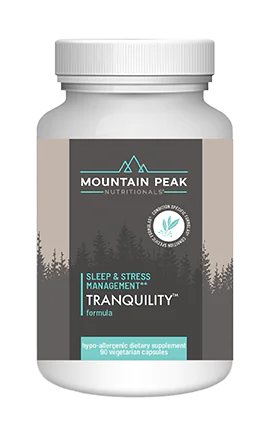
Tranquility™
$50.49 — or subscribe to save 10% Add to cart -

Ultra High™ Multivitamin
$56.99 — or subscribe to save 10% Add to cart -
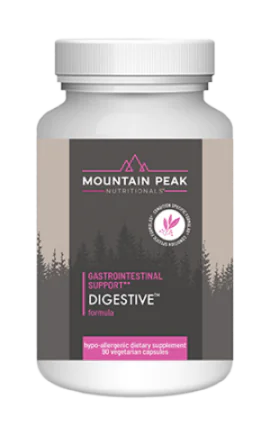
Digestive™
$42.49 — or subscribe to save 10% Add to cart -
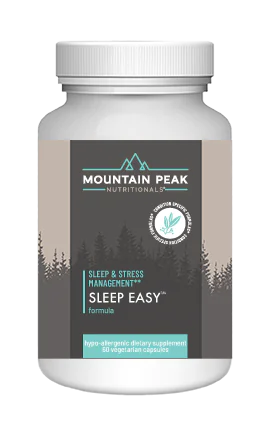
Sleep Easy™
$39.49 — or subscribe to save 10% Add to cart -
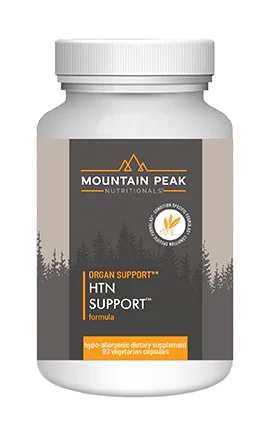
HTN Support™
Price range: $44.49 through $79.99 — or subscribe to save 10% Select options This product has multiple variants. The options may be chosen on the product page -
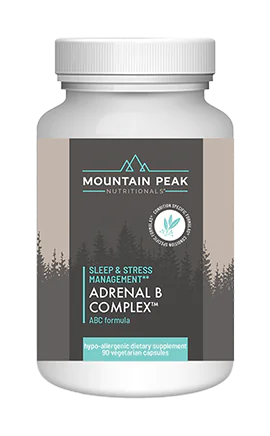
Adrenal B Complex™
$50.49 — or subscribe to save 10% Add to cart -
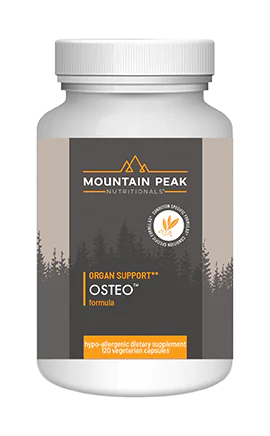
Osteo™
Price range: $35.49 through $62.49 — or subscribe to save 10% Select options This product has multiple variants. The options may be chosen on the product page -

Immuni-T™ — **NEW FORMULA NAME!**
$38.49 — or subscribe to save 10% Add to cart