Updated October 2026
A good night’s sleep can be easy to overlook in today’s busy world.
Yet, sufficient rest plays an important role in overall health, clear thinking, and how you feel throughout the day.
Let’s explore healthy habits that can support your sleep quality, along with natural sleep supplements you may want to discuss with your healthcare professional.
5 Habits for Healthy Sleep
Healthy sleep habits are rooted in what you do throughout the day and how you prepare for bed. These five practical steps can help you build a consistent routine that supports restful nights.
Tip 1: Follow a sleep schedule.
 Try to go to bed and wake up at similar times each day, including weekends. A consistent schedule helps reinforce your body’s sleep-wake rhythm.
Keep in mind that most adults need about seven to nine hours of sleep each night. So, make room for that rest in your schedule.
If naps make it harder to fall asleep at night, keep them brief and earlier in the afternoon.
Tip 2: Exercise during the day.
Regular physical activity belongs in a healthy sleep routine. Find opportunities to move during the day, whether that means walking, working out, or engaging in another activity you enjoy.
When possible, take your physical activity outdoors. A daytime walk or time spent gardening also exposes you to natural light, providing cues that can help your body distinguish daytime from nighttime.
Also, try to plan more intense exercise earlier in the day. Working out close to bedtime may leave you feeling alert when it’s time to be winding down.
Tip 3: Limit caffeine later in the day.
 Caffeine too close to bedtime can make it harder to fall asleep. Its effects can last up to eight hours, so an afternoon coffee may still influence your sleep that evening, even if you no longer feel more alert.
Choose a cutoff time based on your usual bedtime and sensitivity to caffeine, then switch to water or caffeine-free beverages for the rest of the day.
If falling asleep remains difficult, try moving that cutoff earlier and noting whether it makes a difference.
Tip 4: Limit electronics before bed.
Set aside time before bed to put away your phone, computer, and other bright screens.
Evening light can interfere with the normal rise in melatonin, the hormone involved in signaling nighttime to your body.
Dim the lights and switch to a quieter activity, such as reading a printed book. A calmer evening environment can help reinforce the transition toward sleep.
 Tip 5: Wind down and relax.
A consistent wind-down routine gives you time to ease out of the day’s activities.
Try a warm bath, quiet music, gentle breathing, or another relaxing activity you enjoy.
Keep your bedroom cool, dark, and quiet. Choose a routine you can repeat most evenings so that preparing for bed becomes a familiar part of your day.
Natural Sleep Supplements
Alongside healthy sleep habits, some adults consider supplements for additional wellness support. Mountain Peak Nutritionals offers sleep and stress management formulas with different ingredients and intended uses.
Here are two options to explore with your healthcare professional.
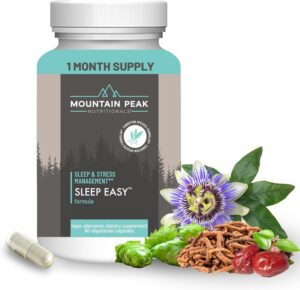 1. Sleep Easy™: Support for a restful sleep experience
Sleep Easy™ combines amino acids and botanicals with melatonin, magnesium, and vitamin B6.
It is formulated to promote mental calmness and support a more restful sleep experience.*
Ingredients include GABA, L-theanine, L-tryptophan, 5-HTP, and botanicals such as passionflower and valerian.
 2. Tranquility™: Support for a calm, relaxed mood
Tranquility™ combines amino acids, botanicals, magnesium, and B vitamins.
It is formulated to promote a calm, relaxed mood and support brain health.*
The formula includes GABA, taurine, L-theanine, 5-HTP, and botanicals such as ashwagandha.
Women’s Vitality™: Support during hormonal transitions
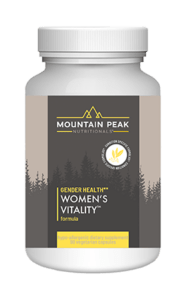 If sleep concerns occur alongside occasional hot flashes or night sweats during perimenopause or menopause, Women’s Vitality™ may be another formula to discuss with your healthcare professional.
It is formulated to support women experiencing occasional discomfort associated with normal hormonal fluctuations, including sleeplessness.* Your provider can help assess which approach fits your symptoms and health history.
Choosing support for your routine
When comparing natural sleep supplements, consider the complete ingredient list, serving directions, quality standards, and your medications or other supplements. Our guide to evaluating supplement quality provides additional insights to help you compare formulas.
For a broader look at how formulas can differ, explore Mountain Peak Nutritionals vs. Generic, Off-the-Shelf & Discount Supplements.
Natural Sleep Supplement FAQs
1. Do all natural sleep supplements contain melatonin?
No. Formulas vary.
Some contain melatonin, while others combine nutrients, amino acids, or botanicals without it.
Sleep Easy™ contains melatonin; Tranquility™ does not.
If you’re concerned about the presence or quantities of melatonin that may be in a supplement:
- Check the complete Supplement Facts panel, including any proprietary blend, for additional details.
- Do not assume the phrase “natural sleep supplement” indicates that a product does or does not contain melatonin.
2. What is the difference between Sleep Easy™ and Tranquility™?
Sleep Easy™ focuses on bedtime support for mental calmness and a more restful sleep experience.* Its published directions specify use before bed.
Tranquility™ focuses on a calm, relaxed mood and brain health, with directions allowing use once or twice daily.*
These natural supplements have different botanical blends and nutrient amounts. Compare their complete labels and intended uses with your healthcare professional when deciding which formula fits your needs.
3. Can I combine sleep supplements with other supplements or medications?

Consult your healthcare professional or pharmacist before combining products.
Sleep Easy™ and Tranquility™ share ingredients such as GABA, L-theanine, 5-HTP, and magnesium, so using both would increase your intake of overlapping ingredients.
Share the complete labels and your medication list so your provider can assess potential interactions and whether the combination is appropriate.
Do not change prescribed medication to accommodate a supplement without your prescriber’s guidance.
4. Should I take a sleep supplement every night?
There is no single schedule that suits every product or person. Follow the current label and agree on an appropriate duration and review point with your healthcare professional.
Also, keep track of your sleep and how you feel during the day. If sleep difficulties persist or affect your daily activities, seek an assessment to identify the cause and discuss appropriate care.
Make Healthy Sleep Part of Your Routine
Investing in your rest means investing in your overall well-being. Start with consistent habits, make space for sleep, and explore additional support with guidance suited to your needs.
Sweet dreams—and here’s to mornings with more energy and vitality!
*These statements have not been evaluated by the Food and Drug Administration. The products discussed herein are not intended to diagnose, treat, cure, or prevent any disease.